
Amazon already has a strong and well established presence in the digital realm, however, it is making steps to also develop a strong physical presence.
What opportunities and challenges lie before Amazon?
It’s a much larger market
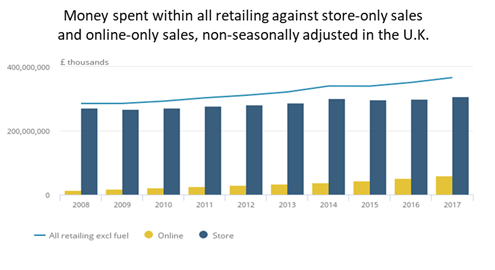
Physical store sales still account for 90 % of all retail purchases in the U.S. and 82 % in the U.K (seen above). The much larger physical market is a huge opportunity for a digital retailer if they can transfer their digital success into physical success. Furthermore, Amazon’s growth has slowed recently suggesting it is a big fish outgrowing its small online pond. Amazon is moving into the physical space in a number of different formats which seems to be so that it can experiment and learn a lot very quickly. This is a good strategy when you have a large search space and know how to use data effectively.
Customers value experiences
Retailers such as Amazon are realizing that customers in physical stores place significant value on experiences rather than just purchasing objects. This Forbes article describes how companies are creating stores which contain no inventory for sale but rather, act as experiences for the customer. The sleepy high street retailers may be under threat from an online retailer who can offer more than a square room filled with shelved products. Additionally, the future main consumers, generation Z, are less concerned about being able to touch and try products but particularly value innovation over other generations.
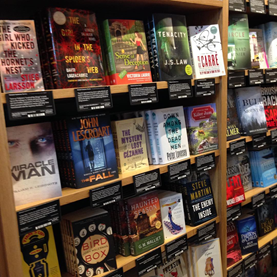
Amazon Books stores offer a more modern feel by emulating aspects of their online store; books are displayed so that customers can see the cover rather than the spine and below each is a review. It’s as much about the experience of a book store as it is about purchases. Another Smart Retailing idea the company has implemented is the utilization of data collected from its Kindle product to decide which books to display.
A similar idea is being used in Amazons new 4 Star store where the inventory is determined by Amazon’s online customer review system. Only items which have a 4 star rating or above are available to purchase.
The future of retail is omni-channel
Retailers such as Amazon are identifying some of the frictions which interfere with the path to purchase. Some of these are from poor integration of digital and physical parts of the business; for example, if there are pricing inconsistencies, no ability to purchase online and take from the shelf. Furthermore, from the checkout process with queue times etc… Omni-channel retail is used to describe the integration of all channels of sale such as online store, bricks-and-mortar, social media etc… this could be by integration of stock management, payment systems, pricing. This is a concept of Smart Retailing which comes from the concept of Smart Cities.
Amazon approaches this with its Amazon Books and Amazon 4 Star stores which both offer the customer the ability to purchase items in the store using their app. Amazon Go on the other hand, is probably the closest thing to a Smart shop that exists. The customer scans their smart device on entry into the shop. This connects their in-store presence to their amazon account. Purchases don’t even require the use of an app or a cashier. The customer can just pick up anything they want to buy and walk out of the store with it. Amazon autonomously charges their card by using Smart technologies. They are creating a seamless online/offline environment which gives the customer many paths-to-purchase with minimum friction.
This video is a great demonstration of how Amazon Go works and highlights nicely the curiosity that customers will have towards these new innovations:
Source [9]
Data collection
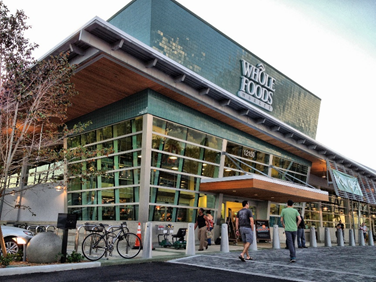
In 2017 Amazon acquired Whole Foods and the main reason for this seems to be data. Groceries and consumables are an area in which Amazon does not have a lot of experience. Acquiring Whole Foods has allowed them the opportunity to better understand and learn people’s grocery buying habits. Which has been an especially good feed for the company which is well known for having an appetite for customer data. This means eventually we could see Amazon being able to predict when you are about to run out of toilet paper and thus target you with toilet paper offers for example.
Grow your own ecosystem
Amazon leverages its Prime service to further sew together the vast ecosystem it is creating. The physical stores and digital services all offer added benefits to people with Prime membership. Eventually, being a Prime member could give you benefits in many aspects of your life. And when you consider people may have Amazon’s Alexa in their home too Amazon seems inescapable. It’s not just that they are making it easier to go the Amazon way. They are trying to make it hard not to. One day Amazon may be everywhere and I’m not sure how I feel about that.
References
[1] Amazon. 2019. Not Everything Makes the Cut – Amazon Super Bowl LIII Commercial. URL= https://www.youtube.com/watch?v=8y-1h_C8ad8&t=11s.
[2] Chow, B. 2016. Flickr. (Unmodified). URL= https://www.flickr.com/photos/free-stuff/25849350202/in/photostream/. CC= https://creativecommons.org/licenses/by/2.0/legalcode.
[3] CNBC. 2018. Inside Amazon’s New 4-Star Store. URL= https://www.youtube.com/watch?v=_lqjxVO4u5M.
[4] Coombs, C. 2018. Tour Amazon’s evolving collection of physical retail experiments (Photos). URL= https://www.bizjournals.com/seattle/news/2018/10/03/inside-amazon-physical-stores-go-books-4-star.html.
[5] Greg,. P. 2017. Forbes. Amazon’s Acquisition Of Whole Foods Is About Two Things: Data And Product. URL= https://www.forbes.com/sites/gregpetro/2017/08/02/amazons-acquisition-of-whole-foods-is-about-two-things-data-and-product/#3e01dfafa808.
[6] Hassan, M. URL= https://pxhere.com/en/photo/1446677.
[7] Hegedus-Garcia, I. 2013. Flickr. New Whole Foods Market – North Miami. (Unmodified). URL= https://www.flickr.com/photos/miamism/8707879659. CC= https://creativecommons.org/licenses/by/2.0/legalcode.
[8] Inside Amazon Videos. 2018. Amazon Books. URL= https://www.youtube.com/watch?v=DLBxC8uGPu4.
[9] Linus Tech Tips. 2018. We Stole Tampons from the Cashier-less Amazon Go Store. URL= https://www.youtube.com/watch?v=vorkmWa7He8.
[10] Mannino, S. 2018. Forbes. Online Retailers: Why Physical Retail Should Be Your Next Move. URL= https://www.forbes.com/sites/forbesnycouncil/2018/04/11/online-retailers-why-physical-retail-should-be-your-next-move/#70c0d27b7f4d.
[11] Mroz, B. 2018. Ecommerce Magazine. Friction-Free Commerce: Meet the Retailers Doing it Right. URL= https://www.ecommerce-mag.com/friction-free-commerce-meet-the-retailers-doing-it-right.
[12] Neely, A. 2017. DMN. Clicks to Bricks: Why Online Retailers are Opening Physical Stores. URL= https://www.dmnews.com/customer-experience/article/13035306/clicks-to-bricks-why-online-retailers-are-opening-physical-stores.
[13] Office for National Statistics. 2018. Comparing “bricks and mortar” store sales with online retail sales: August 2018. URL= https://www.ons.gov.uk/businessindustryandtrade/retailindustry/articles/comparingbricksandmortarstoresalestoonlineretailsales/august2018.
[14] PYMNTS. 2018. The Evolution Of The Amazon Prime Ecosystem. URL= https://www.pymnts.com/amazon-loyalty/2018/prime-ecosystem-free-shipping-delivery-subscription-benefits-whole-foods/.
[15] Rigby, D. 2014. Harvard Business Review. URL= https://hbr.org/2014/09/digital-physical-mashups.
[16] Statt, N. 2018. The Verge. Why Amazon’s future depends on moving from the internet to the physical world. URL= https://www.theverge.com/2018/11/2/18049672/amazon-go-offline-retail-future-competition-walmart-food-drink-grocery-sales.
[17] Stern, N. 2018. Forbes. Amazon 4 Star: Maybe Brick-And-Mortar Retail Isn’t So Easy After All. URL= https://www.forbes.com/sites/neilstern/2018/12/10/amazon-4-star-maybe-brick-and-mortar-retail-isnt-so-easy-after-all/.
[18] Wallace, T. 2018. The 2018 Omni-Channel Retail Report: Generational Consumer Shopping Behavior Comes Into Focus. URL= https://www.bigcommerce.co.uk/blog/omni-channel-retail/.
[19] Wikipedia. List of Amazon products and services. URL= https://en.wikipedia.org/wiki/List_of_Amazon_products_and_services.
[20] Wills, J. 2018. Investopedia. 7 Ways Amazon Uses Big Data to Stalk You (AMZN). URL= https://www.investopedia.com/articles/insights/090716/7-ways-amazon-uses-big-data-stalk-you-amzn.asp.
[21] Youngson, N. URL= http://www.picpedia.org/highway-signs/a/amazon.html.
[22] PANTANO, E. and TIMMERMANS, H., 2014. What is Smart for Retailing? Procedia Environmental Sciences 22(2014/01/01/), 101-107. DOI= http://dx.doi.org/https://doi.org/10.1016/j.proenv.2014.11.010.
[23] PRIPORAS, C.-V., STYLOS, N., and FOTIADIS, A.K., 2017. Generation Z consumers’ expectations of interactions in smart retailing: A future agenda. Computers in Human Behavior 77(2017/12/01/), 374-381. DOI= http://dx.doi.org/https://doi.org/10.1016/j.chb.2017.01.058.
[24] WILLEMS, K., SMOLDERS, A., BRENGMAN, M., LUYTEN, K., and SCHÖNING, J., 2017. The path-to-purchase is paved with digital opportunities: An inventory of shopper-oriented retail technologies. Technological Forecasting and Social Change 124(2017/11/01/), 228-242. DOI= http://dx.doi.org/https://doi.org/10.1016/j.techfore.2016.10.066.
 Simon's Digital Business Models Blog
Hi, do you think these kind of activities can be applied to smaller businesses as well? And is it worth it considering the cost and time needed? Thanks.
LikeLiked by 1 person
Hi vinisk212, thank you for your comment. I’m not completely sure which specific activities you are referring to, so I’ll just cover a few things.
I think at the moment, the smart-shop-style Amazon Go stores are probably a bit too expensive and technically difficult for smaller businesses. They are using some state of the art machine learning techniques on data collected in real time, in the store. This is from a very dense network of cameras and weight sensors, and perhaps even more. Although, some aspects of omni-channel retailing is quite possible. Only the other day I was in the new Hubbox restaurant with some friends. Hubbox is quite a small business with a handful of restaurants in Cornwall, Devon and Somerset. My friend had downloaded their app on his phone and was able to pay for the meal and earn loyalty points. It really doesn’t cost much money to produce a phone app and, I believe, it has a very positive effect on your business. Customers love playing with the new technologies and further, integrating a loyalty system too, it adds another layer of interaction.
Do I think it’s worth it? Imagine a situation where you want to buy a video game and are excited to buy it as soon as possible. You have seen a reasonable price online for say £29, but don’t want to wait for it to arrive in the post,. You decide to go to an outlet of the online store, expecting to walk away with the game that day. However, the in-store price is £49. No worries you think. The store has a price-match guarantee. Nevertheless, a member of staff refuses to match the online price stating ‘we only match other company’s prices’. Things like this are quite common and they are due to there being a disconnect between online and offline parts of the company. I have had similar experiences happen myself. It alienates the customer from the business and nobody really wins. I would say if you are operating in both environments, effective integration should be very important to your company as it reduces this kind of friction. Furthermore, I think with customers there is a growing expectation for businesses to have this amount of integration and if companies don’t keep up and stay competitive they may be left behind.
Regarding the ‘displaying shop items based on online data’ thing. Amazon is in a good position to do this as it has access to a very good data set provided by it’s huge online retail presence. This is likely to be very difficult for small businesses to implement effectively as they simply don’t have the data. And to be honest I don’t think Amazon has implemented it effectively yet. But the point is, they are trying. They are experimenting and learning.The move into the physical retail sector is a bit of a strange one in some ways as it is a market which has much slower growth in comparison to the online market. But I think this is why they are trying so many different things simultaneously. Its all about learning as much as they can as quickly as possible and using that information to grow as quickly as possible.
LikeLiked by 1 person
Thanks for the reply st643! Yeah, I do agree that customers love playing with the new technologies. Yeah, I think it’s not that expensive for businesses to publish their application as well. If I’m not wrong it only cost 25$ in google play store and 99$/year for iOS.
Ohh that’s a really good analogy st643, thanks that really help!
Yeah, I do agree with you as well regarding the difficulty of small businesses to implement this ‘displaying shop items based on online data’ thing. Also, I think it’s not that necessary for small businesses to implement this system yet.
LikeLike
Hi Simon, it’s interesting to read about Amazon Go, I only really became aware of it recently. I think you’re right in stating that the future of retail is omni-channel, even though it seems at present as though physical stores are now almost a taboo subject. I do feel as though this type of business model, where no humans are required in store, will become a lot more frequent throughout the retail sector in the coming years. Yuchen actually wrote a piece that mentions how this is filtering through to banking too (https://chen.travel.blog/2019/03/03/digitalized-banking-service-in-hsbc/). Going forward, I am curious as to how this business model will cater for those that are unbanked or simply have no debit card. It seems as though other businesses that have also gone ‘cashless’ are already facing a backlash (https://www.bloomberg.com/news/articles/2019-03-26/who-is-banning-cashless-stores-amazon-go-could-be-next).
LikeLike