
From the horse drawn carriage, to international airlines, to Elon Musk’s proposed Hyperloop [1], it is apparent that transport is a rapidly evolving industry.
In the digital economy, technologies such as mobile phones, the internet, apps, and global positioning systems have had a huge trans-formative impact for taxi drivers. With customers having the ability to hail a taxi from almost anywhere whilst on the go, taxi companies can maximize business. Global positioning systems have allowed more efficient navigation and the coupling with real time traffic updates further utilizes this technology. Payment methods such as London’s Oyster card and contactless bank cards allow customers to benefit from a hassle free payments that are accepted on multiple forms of transport [2; 3]. They increase efficiency for the business and increase the user experience for the customer. Companies that make effective use of ‘frontier technology’ can have a strong competitive edge.
The digital economy is changing how companies operate. Uber and similar businesses are a new beast on the scene. They can be described as a transportation network company (TNC) and embody the sharing economy. Ubers use of modern technology, including artificial intelligence [4] may allow their drivers to earn more due to higher capacity utilization [5]. Drivers which work with Uber may have a competitive edge through frontier technology. Although, there is also research that contradicts this showing that TNCs have had a depressive effect on the taxi industry due to higher competition [6]. It could also be argued that part of Uber’s advantage is that their business model has allowed them to circumvent certain legislations/regulations and insurances to which ‘traditional’ transport companies have to adhere [7; 8]. Taxi drivers may be more vulnerable under this type of business model.
So what could the future of taxi transport look like?
Companies that have Uber’s ‘man-in-the-middle’ business model may be replaced by new emerging technologies such as blockchain [9].
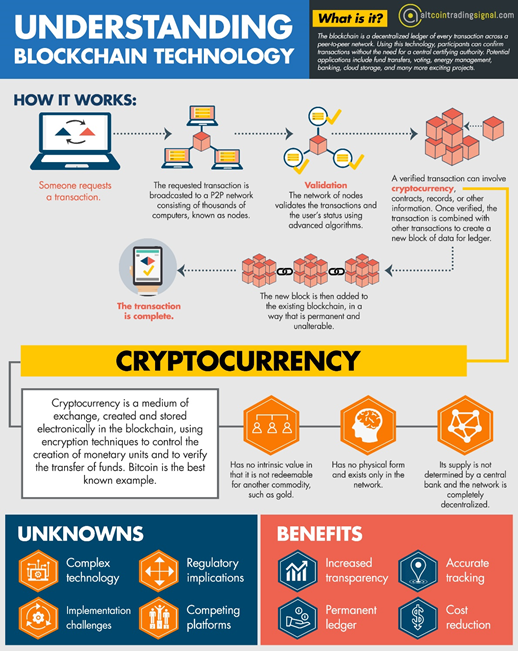
Source [10]
Source [11]
The general idea is that, what Uber does could be done by an automated system, which is not controlled or owned by anybody. This could reduce costs which could be passed on to the taxi drivers and customers.
Self driving cars may also be a thing one day. Google’s self driving car is actually safer than a human driver [11]. A future taxi driver may not look like something we would recognize today.
Source [12]
Taking these things into account, it is quite possible in the future we may see a completely autonomous transport system. Self-driving cars which are controlled by an autonomous decentralized system.
So how has being a taxi driver changed in the digital economy? Rapidly and fueled by frontier technology. Taxi drivers are having to adapt to a shared economy and internet orientated landscape. Future employers may come in a form we have not even imagined yet and taxi drivers need to be vigilante and be able to adapt quickly to survive. There may be competition from autonomy.
References
[1] The B1M. Hyperloop Explained. URL= https://www.youtube.com/watch?v=zcikLQZI5wQ.
[2] Transport for Londona. 2013. TfL’s famous Oyster card celebrates ten successful years making journeys easier for customers. URL= https://tfl.gov.uk/info-for/media/press-releases/2013/July/tfls-famous-oyster-card-celebrates-ten-successful-years-making-journeys-easier-for-customers.
[3] Edwards, T. 2015. Contactless payment continues to grow in London. URL= https://www.bbc.co.uk/news/uk-england-london-31925605.
[4] Koestier, J. Uber Might Be The First AI-First Company, Which Is Why They ‘Don’t Even Think About It Anymore. URL= https://www.forbes.com/sites/johnkoetsier/2018/08/22/uber-might-be-the-first-ai-first-company-which-is-why-they-dont-even-think-about-it-anymore/#13fc45945b62.
[5] Berger, T., Chen, C., and Carl Benedikt, F., 2018. Drivers of Disruption? Estimating the Uber Effect. European Economic Review 110(C), 197-210. DOI= http://dx.doi.org/DOI: 10.1016/j.euroecorev.2018.05.006.
[6] Jiang, W. and Zhang, L., 2018. The Impact of the Transportation Network Companies on the Taxi Industry: Evidence from Beijing’s GPS Taxi Trajectory Data. IEEE Access 6, 12438-12450. DOI= http://dx.doi.org/10.1109/ACCESS.2018.2810140.
[7] Facts in Motion. Why Uber Failed in Germany. URL= https://www.youtube.com/watch?v=5KXsMiOKXAA.
[8] Taylor, K. 2017. 40 of the Biggest Scandals in Uber’s History. URL= https://www.businessinsider.com/uber-company-scandals-and-controversies-2017-11?r=US&IR=T#october-2010-ubercab-receives-its-first-cease-and-desist-1.
[9] Marr, B., 2018. Why Blockchain Could Kill Uber. Forbes, URL= https://www.forbes.com/sites/bernardmarr/2018/02/09/why-blockchain-could-kill-uber/#69e189924179.
[10] Altcointradingsignal. UNDERSTANDING BLOCKCHAIN TECHNOLOGY: FOR DUMMIES (2019 INFOGRAPHIC). URL= https://www.altcointradingsignal.com/understanding-blockchain-technology-2018-infographic/.
[11] TheAnarchast. Arcade City: The Decentralized, Blockchain Based Uber Killer. URL= https://www.youtube.com/watch?v=C6dxHU3pvGE.
[12] Teoh, E.R. and Kidd, D.G., 2017. Rage against the machine? Google’s self-driving cars versus human drivers. Journal of Safety Research 63(2017/12/01/), 57-60. DOI= http://dx.doi.org/https://doi.org/10.1016/j.jsr.2017.08.008.
[13] Eduard BP. Self Driving Cars Explained – Animated Infographic. URL= https://www.youtube.com/watch?v=vWqDzoQH1yw.
 Simon's Digital Business Models Blog
Good response in return of this issue with firm arguments and telling everything about that.
LikeLike